How Many Custom Floating Keychains Should You Order? A Quantity Planning Guide
The right number of floating keychains is the number of keys that go near water, plus spares for losses and handouts, rounded to a run you can reorder easily. Custom Floating Keychains starts at a minimum of 12, sends a free mockup within 24 hours, and ships in about 2 weeks, so you can order for today and restock without stress.
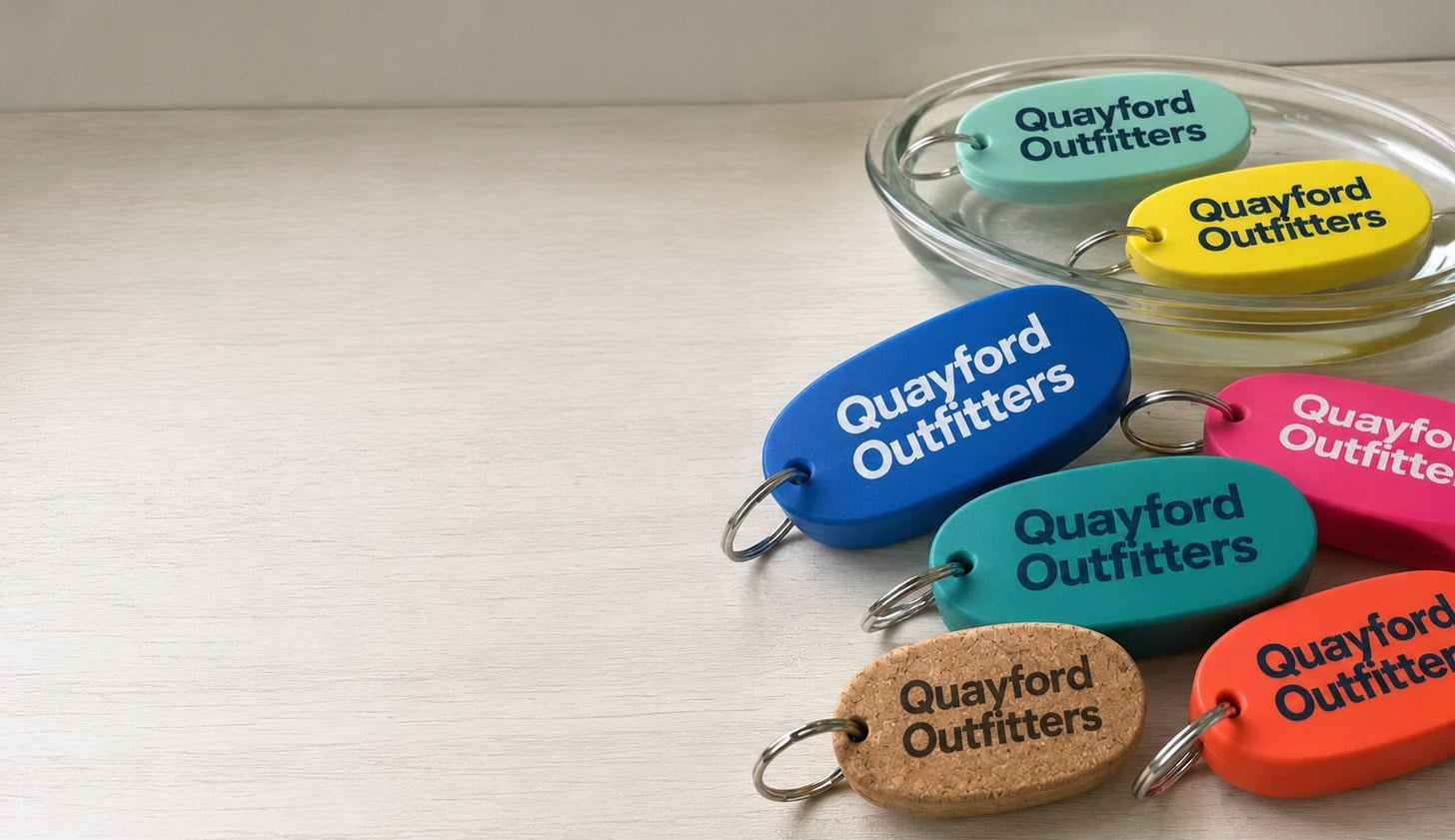
- Minimum order is 12 floating keychains
- Free mockup within 24 hours, unlimited free revisions
- Standard turnaround about 2 weeks, faster with express shipping
- Pay nothing until you approve the design
- Reorders reuse your approved artwork
How do I work out how many floating keychains to order?
Start your floating keychains count with the keys, not the budget. Walk through every key that leaves a dock, a counter or a locker and goes near water: boat ignition keys, rental cart keys, dock box keys, cabin keys and gate fobs. That number is your working base, and everything else is added on top of it.
Next, decide what role the floats play. A float that stays attached to a fleet key for a whole season is an operating supply. A float handed to a guest at checkout is a giveaway. Most buyers need both, and mixing the two in one count is the most common reason an order runs short in midsummer.
- List every key that goes on or near water.
- Add a spare allowance for keys that get lost overboard or walk off with guests.
- Add handout stock for customers, events or retail.
- Round up to a quantity you would be happy to reorder.
Custom Floating Keychains can quote several quantities side by side on the quote form, so you can compare a lean run with a fuller one before you commit.
How many spare floating keychains should a marina or rental fleet keep?
A marina or rental fleet should keep enough spare floating keychains to replace every float that goes missing before the next order can arrive. With a standard turnaround of about 2 weeks, that means holding enough spares to cover a full production cycle of your busiest losses, not your average ones.
Losses are rarely even. A pontoon rental desk on a holiday weekend can lose more floats over one long weekend than in a quiet month. Kayak and paddleboard outfitters see floats leave on wrists and in pockets. Fuel docks and slip offices often lose fewer, because keys stay behind the counter.
A practical approach is to keep a small labeled box of spare floats with your branding already applied, so a replacement goes on a key in seconds instead of waiting for a reorder. If you run several locations, give each one its own spare box rather than a single shared stash that always seems to be somewhere else. Our bulk floating keychains page covers how marinas and fleets usually set up case-level orders.
Should giveaway floating keychains be counted separately from fleet keys?
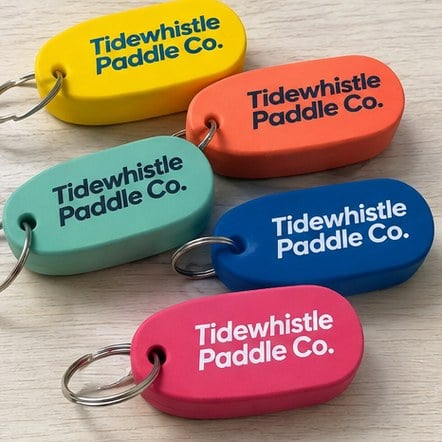
Yes, count giveaway floating keychains separately from fleet floats, because they behave differently and often need different designs. Fleet floats usually carry a boat or slip number and your phone line so a found key can come home. Giveaway floats carry your logo and a short message because they leave with the customer and keep marketing you afterward.
For giveaway stock, estimate how many guests, renters or event visitors you expect in the period the order needs to cover, then decide whether every guest gets one or only certain bookings do. A dive shop might hand one to every certification student. A resort might reserve them for boat rental guests rather than every room.
| Float role | What drives the count | Typical design content |
|---|---|---|
| Fleet and operating keys | Number of keys plus spare allowance | Boat or slip ID, contact line, logo |
| Customer giveaways | Guests or renters in the season | Logo, tagline, website |
| Retail resale | Shelf space and sell-through | Destination name, boat name, artwork |
| Events and tournaments | Registered entrants plus staff | Event name, date, sponsor marks |
Can one floating keychains order cover several designs or boat names?
One floating keychains order can often cover more than one design, which makes quantity planning easier for operators with mixed needs. A common setup is a single float style with a shared logo and a different boat name, slip number or location on each group. That keeps the look consistent across the fleet while every key stays identifiable.
When you split a run, plan the count for each version separately and make sure every version clears the practical quantity your quote allows. Custom Floating Keychains confirms how a split order works on your mockup, so you see each version before anything is produced. If you need individual boat names on each float, the personalized boat keychains page shows how names are usually laid out.
Splitting too many ways is the main trap. If you only need a handful of floats for a rarely used boat, consider using a general fleet design for that key and saving name-specific floats for the boats that move most. Fewer versions also make your next reorder simpler to place and simpler to check when the carton arrives.
When should I reorder floating keychains so I never run out?
Reorder floating keychains when your remaining stock would last about as long as a full production cycle, plus a little margin. Because standard turnaround is about 2 weeks and the mockup comes back within 24 hours, a reorder placed when you still have a few weeks of spares on hand usually lands before the box is empty.
Set a simple trigger. Mark a line inside your spare box, or note a count on the dock office whiteboard, and place the reorder when stock falls to that level. Waiting until the box is empty forces you into express shipping or leaves keys without floats on a busy weekend.
- Before peak season: stock your full operating set plus spares several weeks ahead of opening.
- Mid-season: place a top-up order when spares hit your trigger.
- End of season: count what is left, note losses, and use that number to size next year.
Reorders are faster to approve because your artwork is already on file. Confirm the design, adjust the quantity, and the order can move into production.
Is it better to order a large run once or several smaller runs?
The best choice between one large floating keychains run and several smaller ones depends on how settled your design is and how much storage you have. A single larger run suits operators with a stable logo, predictable fleet size and a dry place to store cartons. Several smaller runs suit businesses that change branding, add boats mid-season or test new giveaway ideas.
Larger runs generally cost less per float, because setup is spread across more pieces, but they tie up cash and shelf space. Smaller runs keep stock fresh and let you change colors or wording between seasons. The quote form lets you ask about more than one quantity, so you can see how the tradeoff looks for your specific float style and decoration.
Storage matters more than people expect. Cork floats in particular should stay dry and out of direct sun between seasons, so plan quantities you can store properly. The cork floating keychains and foam floating keychains pages explain how each material is usually used, which helps you decide how far ahead you want to buy.
What should a first-time buyer check before confirming the quantity?
Before confirming a floating keychains quantity, a first-time buyer should check four things: the key count is real, spares are included, every design version is counted separately, and the delivery date leaves room for the mockup and production. A quick review here prevents the two classic outcomes of a first order, running out in July or storing cartons for years.
- Recount keys with the person who actually hands them out, not from an old inventory sheet.
- Confirm your spare allowance covers a busy stretch, not an average week.
- List each design version with its own quantity.
- Check the date you need floats in hand against the 24-hour mockup and the roughly 2-week turnaround.
Custom Floating Keychains asks for nothing up front: you approve the mockup first, with unlimited free revisions, and pay only after the design is right. You can see the full sequence on the how it works page, then send your counts through the quote form.
Frequently asked questions
How do I estimate floating keychains for a boat rental business?
Floating keychains for a boat rental business are best estimated by counting every rental key, then adding spares for busy weekends when floats go missing most. Add giveaway stock only if renters keep a float. Custom Floating Keychains can quote two or three quantities side by side, so you can compare a lean order with a fuller one before choosing.
Do I need spare floating keychains if my keys rarely leave the office?
Spare floating keychains are still worth holding even when keys rarely leave the office, because a single lost key on the water costs far more than a float. A small spare box covers broken split rings, worn prints and new keys added mid-season. Keeping a handful on hand also means no key goes out without a float.
Can I order floating keychains for several marina locations at once?
Floating keychains for several marina locations can usually be ordered together, with one shared design or a separate location name on each group. Plan a count for every site, including its own spares. Custom Floating Keychains shows each version on the free mockup, returned within 24 hours, so every location manager can check their version before production.
How far ahead of boating season should I order floating keychains?
Floating keychains for boating season should be ordered several weeks before opening day. Standard turnaround is about 2 weeks after you approve the mockup, and the first mockup arrives within 24 hours. Leaving extra time covers revisions, internal sign-off and delivery, so your floats are on keys before the first busy weekend instead of arriving during it.
What is a sensible trigger point for reordering floating keychains?
Floating keychains should be reordered when remaining spares would last roughly as long as a full production cycle, with some margin. Mark a line in your spare box or set a count on a whiteboard. Custom Floating Keychains keeps your approved artwork on file, so a reorder mostly means confirming the design and the new quantity.
Should I order floating keychains for giveaways and fleet keys in one run?
Floating keychains for giveaways and fleet keys can share one run when the same float style suits both, with separate design versions for each role. Fleet floats often carry a boat number and contact line, while giveaways carry your logo and website. Counting each role separately keeps one group from quietly eating the other's stock.
How many floating keychains does a fishing tournament usually need?
Floating keychains for a fishing tournament are usually counted from registered entrants, plus captains, staff, volunteers and sponsors who should receive one. Add a margin for late registrations. Custom Floating Keychains can place the event name and sponsor marks on the float, and the free mockup lets organizers confirm layout before registration closes.
Can I start with a small floating keychains order and scale up later?
Floating keychains can be ordered small first and scaled up later, which suits new businesses or anyone testing a giveaway idea. The minimum order is 12. Once your design is approved it stays on file, so a larger follow-up order of floating keychains is quicker to place and keeps the same look as the first run.
How should I store extra floating keychains between seasons?
Extra floating keychains should be stored in a dry, shaded place in their original cartons, away from fuel and solvents. Cork floats especially prefer dry storage out of direct sun. Count what remains at season end and note losses, because that record is the most reliable way to size the next order of floating keychains accurately.
Can different boat names be included in one floating keychains order?
Floating keychains with different boat names can often be included in one order, with a shared logo and an individual name on each group. List each name with its quantity when you request a quote. Custom Floating Keychains shows every name on the mockup, and you can request unlimited free revisions until spelling and layout are right.
What happens if I order too few floating keychains?
Floating keychains ordered too short usually mean some keys go out without floats or a rushed reorder. Because standard turnaround is about 2 weeks, with faster turnaround available through express shipping, a quick top-up is possible but costs time. Ordering with a realistic spare allowance from the start avoids most shortfalls during the busy season.
Get a free mockup for your floating keychains
Send your logo or idea and the quantity you have in mind. Custom Floating Keychains returns a free mockup within 24 hours, you approve the design before anything is produced, and standard turnaround is about two weeks with faster options available. Get a custom quote.