The floating keychain that is right for a paddleboard rental is the wrong one for a dive shop, and both are wrong for a resort gift-shop giveaway. The float that works is decided less by the design you print on it and more by who is holding it, what is on the ring, and how the keys get lost in the first place. Before you pick a color or a shape, it helps to match the float to the job it actually has to do on the water.
Start with the load, not the logo
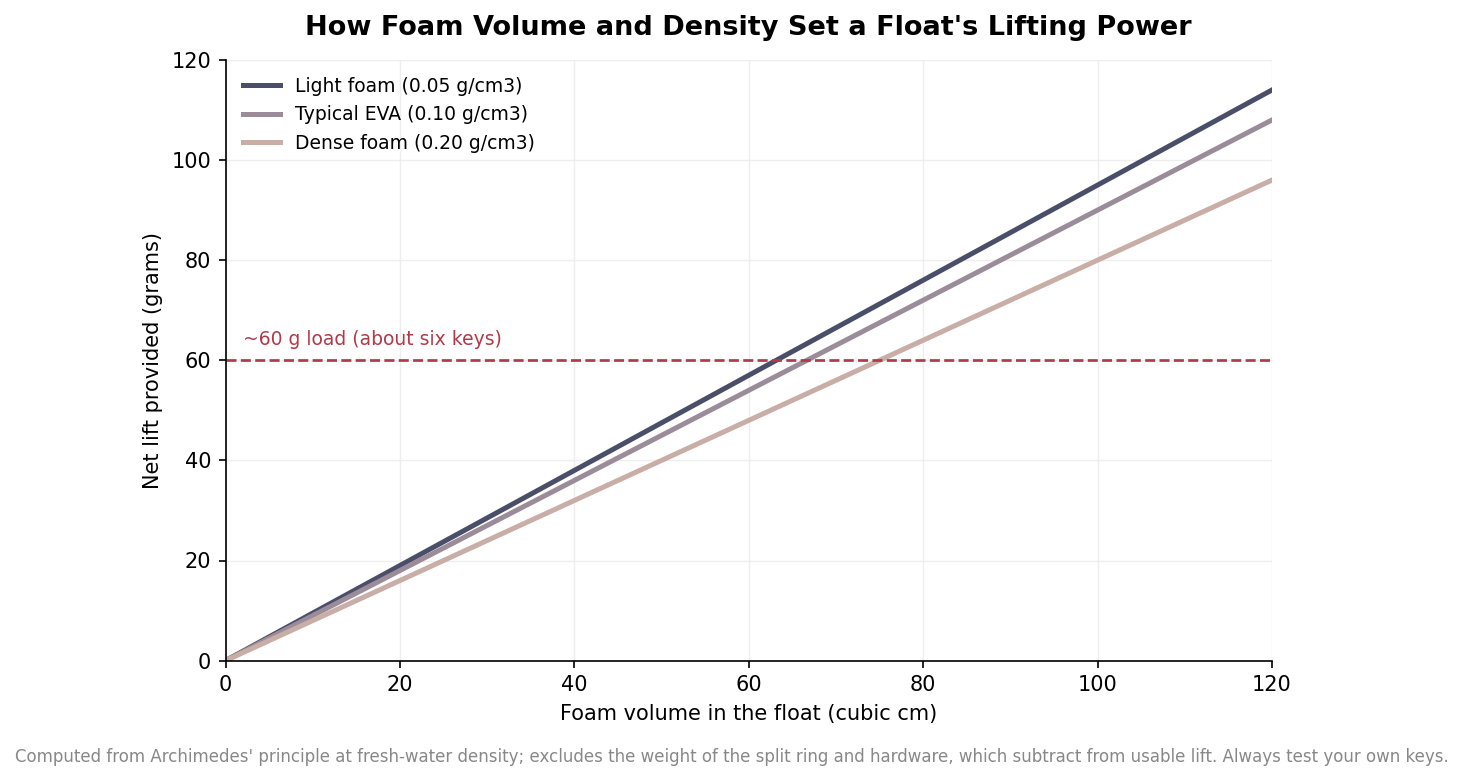
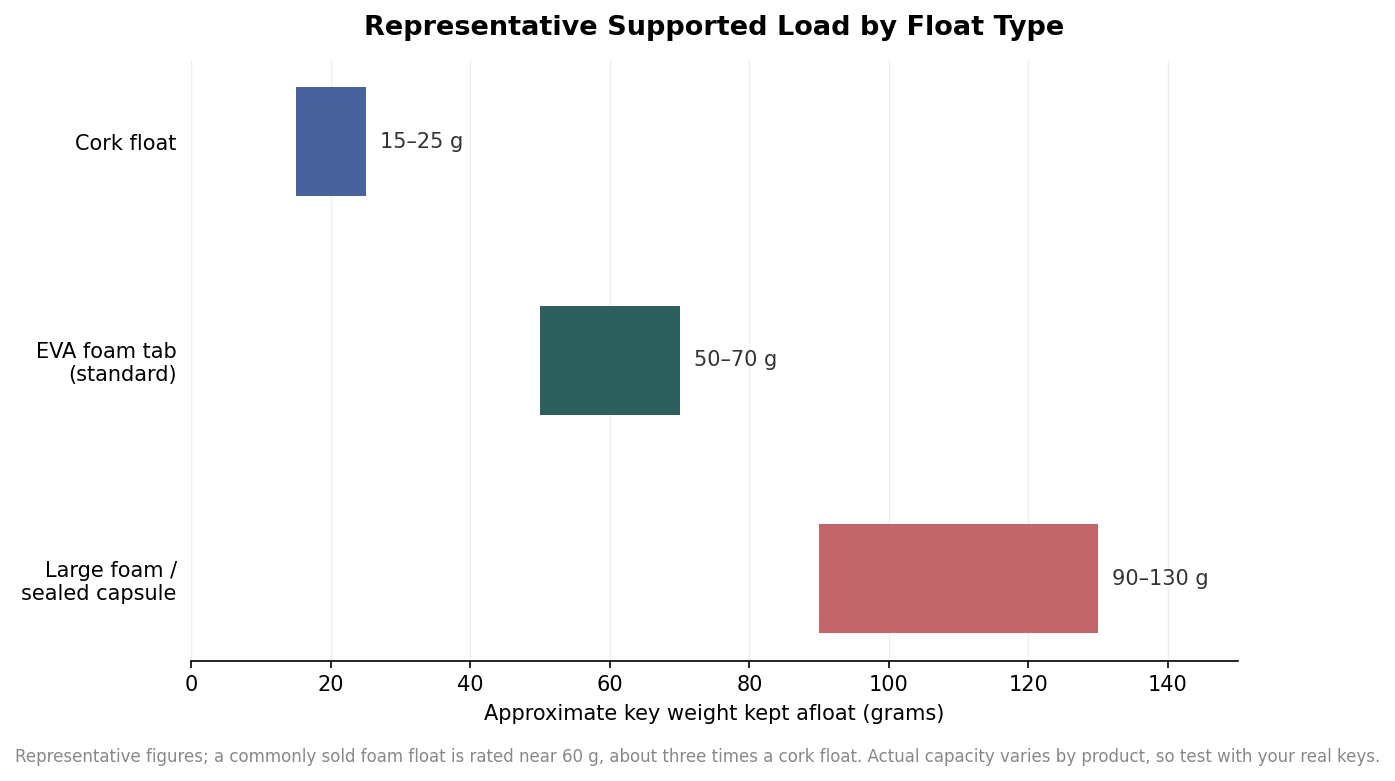
A float only earns its name if it can carry the weight it is asked to hold. Foam does this because a closed-cell material such as EVA traps air and barely absorbs water, with a density somewhere between about 0.03 and 0.20 grams per cubic centimeter against water at roughly 1.0, so every cubic centimeter of foam provides close to a gram of lift. That sounds generous until you add up a real key ring. One commonly sold foam key float is rated to keep about 60 grams afloat, roughly six keys, which is about three times what a small cork float manages. A single brass boat key sits well inside that budget; a modern car fob with a metal transponder, or a ring loaded with a half-dozen keys and a bottle opener, can eat straight through it. The rule that survives every use case is to size the float to the heaviest ring you will actually hand out, and then to test that exact ring in a bucket of water before anyone trusts it in a lake.
Match the float style to the setting
Once the load is covered, the setting decides the form. A marina or boat rental that hands over a single key on a ring is well served by a standard foam tab, which gives you a broad printable face and plenty of lift for a light load. A dive shop or fishing charter tends to put heavier, multi-key rings and gear keys in customers’ hands, which pushes you toward a larger foam body or a sealed buoyant capsule with more reserve lift. A jet-ski, kayak, or paddleboard rental lives and dies on quick retrieval in choppy water, so a bright, high-contrast float that a staffer can spot at a glance matters more than a large imprint. A waterfront resort or promotional giveaway is the one case where the branding surface leads, because the keychain is a marketing piece first and a safety device second, though it still needs enough foam to justify the word floating.
A quick way to choose by business type
If you want a shortcut, work backward from the customer interaction. Ask how heavy the typical ring is, whether the keys leave the dock in a customer’s pocket or stay clipped to a rental, and how far away a dropped float has to be spotted. A business that hands out light single keys can standardize on an economical foam tab and spend its budget on print quality. A business whose customers carry heavy or valuable keys should buy reserve buoyancy it will rarely need, because the one time a loaded ring goes overboard is the day the extra lift pays for the entire order. And a business giving the keychain away as a marketing item should optimize the branding surface but still confirm the float holds at least a single key, so the product lives up to its own name in a customer’s hand.
Color and retrieval are part of the spec
On open water, floating is only half the job; being seen is the other half. A float can bob at the surface and still be nearly invisible against glare or chop if it is a muted color or too small to catch the eye. For any rental fleet, standardizing on a single high-visibility color such as safety orange or yellow does double duty, making a dropped set easy to spot and making the fleet’s keys instantly recognizable as belonging to the business. Size plays into this too: a slightly larger float is easier to see and easier to grab with cold hands, which is often worth more in practice than shaving a few cents off a smaller blank. Shape matters at the margins as well, since a long tab is easier to snatch from the water than a compact disc, and a reflective or printed stripe in a contrasting color adds a second visual cue when the base color washes out under bright sun.
Print, size, and the branding surface
The last decisions are practical. Foam takes a printed logo well, but the usable imprint area is smaller than the float looks, and a busy, multi-color mark on a curved foam face reads worse than a bold, simple one. Decide early whether you need one-sided or two-sided printing, since a giveaway wants the brand facing out on both sides while a rental only needs its name legible. Where a supplier quotes minimum order quantities, lead times, or per-unit price breaks, treat those as indicative until the float style, size, and imprint are locked, because moving from a small foam tab to a larger sealed float changes both the tooling and the shipping weight. Settle the use case first, size the buoyancy to the real keys, then let color and print follow, and the keychain does its one job when a customer fumbles a ring over the side.